
In almost every Indian home, there’s a woman who quietly runs the show — managing the household budget, paying bills on time, saving from daily expenses, and ensuring the family never falls short. She is the family’s real CFO. Yet, when it comes to investments, insurance, or wealth creation, she often takes a backseat — not because she isn’t capable, but because for generations, she’s been told that “finance is complicated” or “someone else will handle it.” But true financial empowerment begins right at home — when women recognize the value of their financial instincts and consciously take part in decisions that shape their family’s future.
Why Women’s Participation Matters
When women engage in financial planning, families grow stronger and more secure. Research shows women investors tend to be more patient, disciplined, and goal-oriented — qualities that are vital for long-term wealth creation. According to AMFI and NDTV Profit data, women now make up nearly 26% of all mutual fund investors in India, up from just 15% in 2017. Their mutual fund assets under management have more than doubled in five years, reaching ₹11.25 lakh crore in 2024. Similarly, women bought over 34% of life insurance policies in 2022–23 and accounted for nearly 40% of new health insurance buyers in FY24. These figures show that women are no longer just “savers”; they are active investors shaping the financial future of their families.
The Risk Aversion Bias: Strength and Limitation
Behavioral finance helps us understand a key psychological trait that shapes women’s investment patterns — risk aversion bias. Women tend to prefer financial safety over high returns. This cautious approach makes them excellent long-term investors, avoiding impulsive or emotional decisions. However, excessive risk aversion can also limit growth. Many women continue to rely heavily on fixed deposits, recurring savings, or gold — which often fail to beat inflation. For example, an FD may earn around 6–7%, while long-term equity mutual funds can yield 10–12% CAGR. The reluctance to explore higher-return assets means missing out on wealth creation opportunities. The goal isn’t to take unnecessary risks, but to find balance — combining safety with smart growth. Structured investments like mutual funds or SIPs offer this balance beautifully.
From Managing Expenses to Building Wealth
The truth is, women already possess the most important financial skills — planning, prioritizing, and saving. What’s needed now is to take those instincts from household management to formal investing. Start small. Begin a Systematic Investment Plan (SIP) — even ₹1,000 a month compounds into something powerful over time. Review insurance coverage, understand your financial goals, and have open conversations about money at home. Every rupee you invest carries your values — care, foresight, and resilience.
Breaking the Silence Around Money
Many women hesitate to ask questions about money, fearing they’ll sound uninformed. But finance is not about complex math — it’s about mindset. Confidence grows when you learn, take small steps, and see real progress. Talking about money openly is not selfish — it’s responsible. Money isn’t just about returns; it’s about voice, respect, and participation. When women are equal partners in financial decisions, the entire family becomes more secure, stable, and future-ready.
The Ghar Ki Munimji Movement
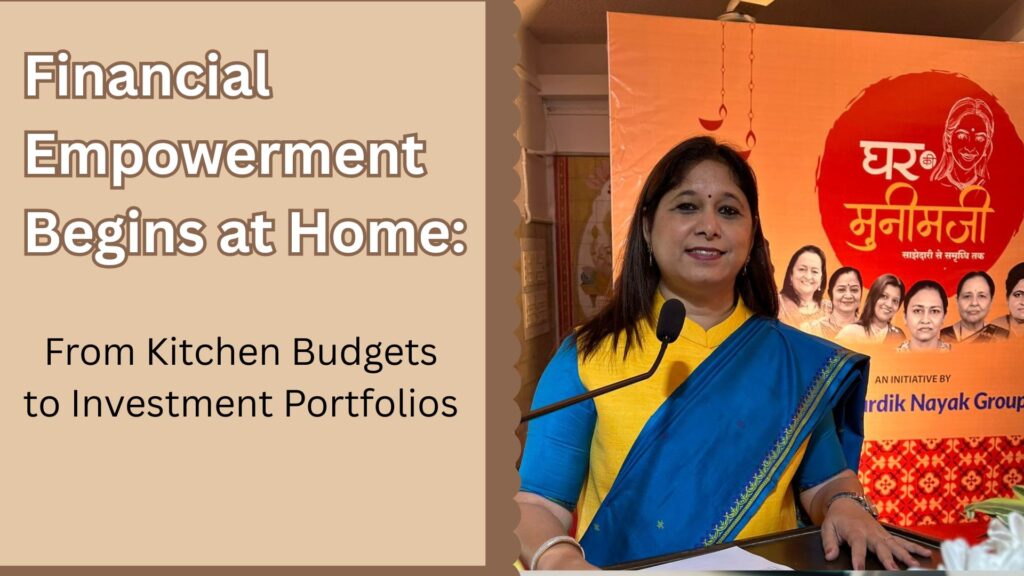
At Haardik Nayak Financial Products Distribution Pvt. Ltd., we launched Ghar Ki Munimji to turn this awareness into action. It’s India’s first free, global platform dedicated to helping women become confident investors. Through hybrid events, expert sessions, and real-life stories, GKM helps women move from silent savers to empowered wealth creators. Because true prosperity doesn’t begin in the markets — it begins at home, when the Ghar Ki Munimji in every woman realizes she doesn’t just manage money; she creates wealth.