Every year on International Women’s Day, the global community reflects on the achievements of women and the continuing journey toward gender equality. While significant progress has been made in education, entrepreneurship, and leadership, financial empowerment remains a critical dimension of true equality. Access to financial knowledge, investment opportunities, and participation in wealth creation plays an important role in strengthening women’s long-term economic agency.
Historically, leadership in financial services—particularly in asset management, wealth advisory, and capital markets—has been largely male-dominated. Over the past two decades, however, several women leaders have emerged who are reshaping financial institutions while also promoting financial literacy, financial inclusion, and economic independence among women.
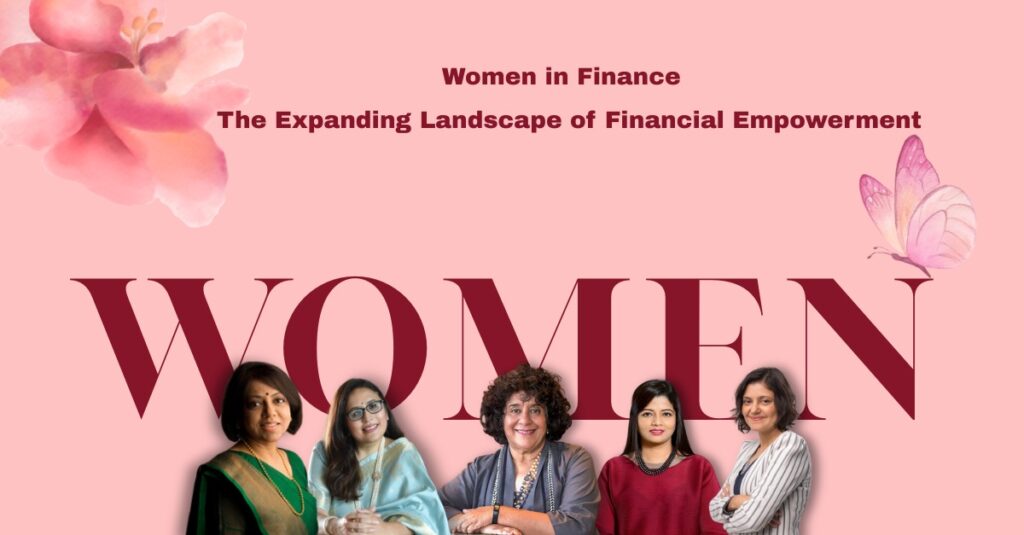
One such leader is Radhika Gupta, Managing Director and Chief Executive Officer of Edelweiss Mutual Fund. An alumnus of the University of Pennsylvania, Gupta began her career at McKinsey & Company before co-founding Forefront Capital, a hedge fund later acquired by the Edelweiss Group. Under her leadership, Edelweiss Mutual Fund has expanded investor outreach and product innovation. Gupta has consistently encouraged women to move beyond traditional saving habits and become confident participants in capital markets. Through public engagement and investor education initiatives, she highlights the importance of disciplined investing, long-term financial planning, and the power of compounding.
Another influential voice in global investing is Devina Mehra, founder and chairperson of First Global. A gold medalist from the Indian Institute of Management Ahmedabad, Mehra has more than three decades of experience in international capital markets. Her work emphasizes disciplined asset allocation and awareness of behavioural biases in investing. She has often highlighted that financial independence forms the foundation of genuine personal autonomy—an idea particularly relevant for women navigating professional and personal transitions.
The entrepreneurial dimension of financial leadership is represented by Madhu Lunawat, founder of the Pantomath Group and promoter of The Wealth Company Mutual Fund. Lunawat has built a diversified financial services platform spanning investment banking, asset management, and financial distribution. One of her notable initiatives, the “MF Didi” program, trains women to become mutual fund distributors and financial educators in their communities. By creating livelihood opportunities alongside financial awareness, this model reinforces the strong relationship between financial literacy and economic empowerment.
India’s wealth management and family office advisory sector has also seen strong female leadership through Soumya Rajan, Founder and Chief Executive Officer of Waterfield Advisors. Established in 2011, Waterfield Advisors is one of India’s leading independent multi-family offices. Rajan previously held leadership roles at Citi Private Bank and Standard Chartered Bank before founding Waterfield with the vision of providing independent and conflict-free wealth advisory services. Her work emphasizes structured wealth management, family governance, and succession planning, while encouraging greater involvement of women in family wealth conversations and long-term financial decision-making.
Financial empowerment in the digital era is also being driven by technology. Sairee Chahal, founder of Mahila Money, represents this emerging dimension. Through Mahila Money, she has built a fintech platform designed to address the financial needs of women entrepreneurs by providing micro-loans, credit tools, and financial resources tailored to women-led enterprises. By leveraging digital technology, such initiatives address structural barriers that often limit women’s access to credit and formal financial systems.
Together, these leaders illustrate how financial empowerment operates across multiple layers of the financial ecosystem—from asset management and global investing to wealth advisory, fintech innovation, and financial distribution. Their initiatives expand access to financial markets while also encouraging women to view money management and investing as integral aspects of personal empowerment.
Despite these advances, the need for financial literacy at the grassroots level remains significant. In many households, women continue to play a limited role in investment decision-making. Addressing this gap requires community-level initiatives that build financial awareness and confidence.
One such initiative is Ghar Ki Munimji, promoted by the Haardik Nayak group. The initiative focuses on strengthening financial literacy and wealth awareness among women and families in South Gujarat. Through workshops, community sessions, and interactive discussions, it encourages women to move beyond passive saving habits and develop a deeper understanding of investments, risk management, and long-term wealth creation. By equipping women with financial knowledge and practical tools, the initiative aims to foster confidence and encourage greater participation in household financial decisions.
The journeys of women leaders in finance and grassroots initiatives such as Ghar Ki Munimji represent two complementary dimensions of the same movement. While women leaders continue to influence financial institutions and global markets, community initiatives help ensure that financial knowledge reaches households and everyday decision-makers. Together, they reflect the true spirit of International Women’s Day—empowering women not only through opportunity, but through knowledge, confidence, and financial independence.
References
Chahal, S. (2023). Financial Inclusion and Women Entrepreneurship Initiatives.
Gupta, R. (2024). Investor Education and Financial Awareness Programs at Edelweiss Mutual Fund.
Lunawat, M. (2024). Financial Inclusion through Mutual Fund Distribution Initiatives.
Mehra, D. (2023). Money, Myths and Mantras: The Ultimate Investment Guide.
Rajan, S. (2024). Independent Wealth Advisory and Family Office Services in India.
Disclaimer:
This article is for educational and informational purposes only and does not constitute investment advice or a recommendation. The views expressed are based on the author’s personal research and expertise in behavioral finance and wealth management, and are not affiliated with or endorsed by any mutual fund house or financial product provider. Professor (Dr.) Meghna Dangi is not a SEBI-registered investment advisor. These are not promotional endorsements of any specific brand or financial institution.